

Key Takeaways
- Plan for approximately 90 minutes for your consultation appointment.
- Bring your current glasses, current prescription (if you have it), contact lens history, and a list of any medications you take.
- Your eyes may be dilated during the exam, so consider arranging a ride home.
- Your ophthalmology team will assess your eye health and determine whether PRK is an appropriate option for your vision needs.
- If PRK isn’t the right fit, other vision correction procedures may be discussed.
- There is no pressure to book surgery on the same day.
If you’ve been thinking about reducing your dependence on glasses or contact lenses, PRK may be one of the vision correction options you’ve started researching. But before deciding on surgery, it’s important to understand whether the procedure is suitable for your eyes.
A PRK consultation at Vector Eye Centre combines a comprehensive eye exam with detailed diagnostic testing and a conversation about your vision goals. Your ophthalmologist will review your results, explain your options, and answer any questions you have about the procedure. Here’s what you can expect from start to finish.
How Long the Appointment Takes and What to Bring
Set aside approximately 90 minutes for your PRK consultation. This allows time for diagnostic testing, a review of your vision history, and a detailed discussion of your results and treatment options with your ophthalmologist (eye surgeon).
Before you arrive, gather a few things:
- Your current glasses, current prescription and a record of any contact lenses you wear.
- A list of medications you take, including eye drops.
- Any relevant information about previous eye conditions, injuries, or procedures.
- A plan for getting home if your pupils are dilated, as your vision may be temporarily blurry afterward.
Coming to this appointment doesn’t commit you to anything. It’s simply a chance to get clear information so you can make a decision that feels right for you.
Attending a consultation doesn’t commit you to having surgery. It’s an opportunity to understand your eye health, explore your options, and decide whether PRK is something you’d like to pursue.
The Eye Exam and Diagnostic Tests
What Gets Tested
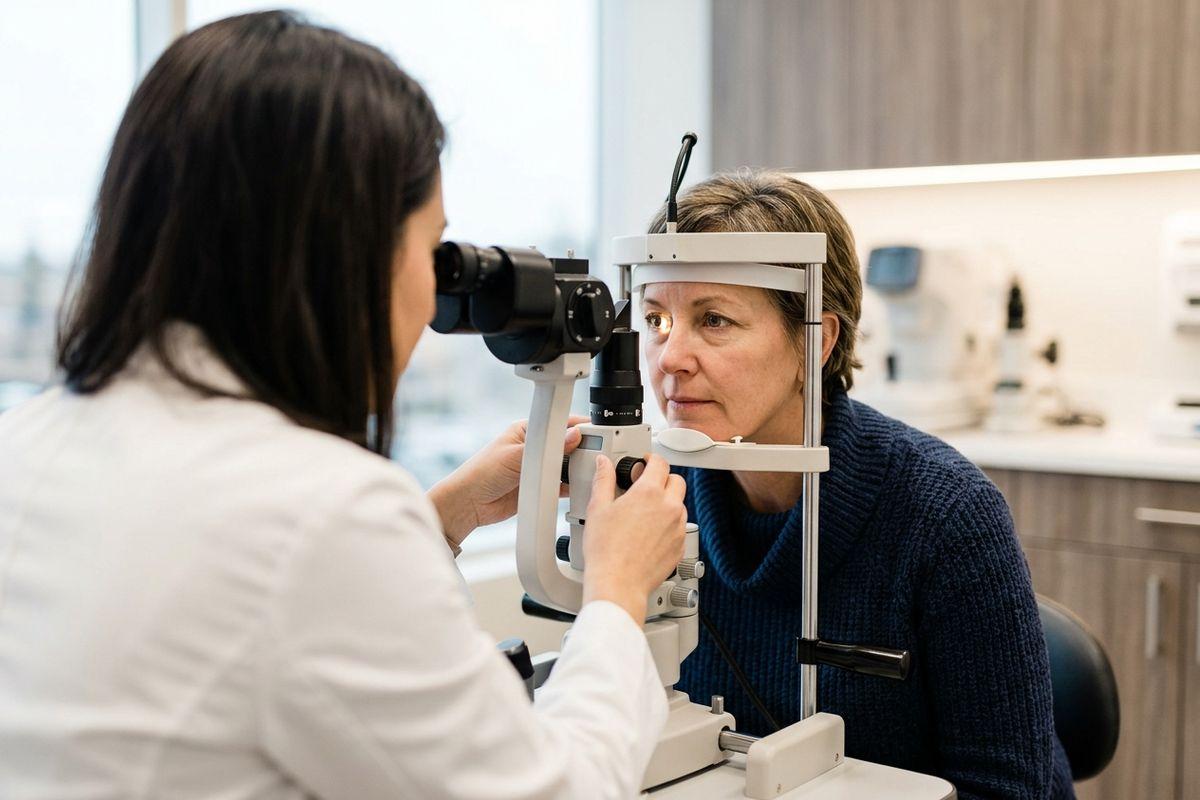
A PRK consultation involves more than checking your prescription. Your ophthalmologist needs a detailed understanding of your eye health and corneal characteristics before determining whether you’re a suitable candidate.
Our team measures your corneal (the clear outer layer of your eye) shape and thickness, checks your tear film for signs of dry eye disease, and examines your retina (the back of your eye). Additional measurements help assess your prescription and identify any factors that could affect your eligibility for PRK or your expected results.
These tests are particularly important because PRK works by reshaping the cornea to correct refractive errors such as nearsightedness, farsightedness, and astigmatism. Understanding the condition of your cornea helps your ophthalmologist determine whether this approach is appropriate for you.
Why Dilation May Be Recommended
Dilating your pupils gives your ophthalmologist a full, clear view of the back of your eye so they can better assess whether eye surgery suits and is safe for your individual needs. Your vision may be a little blurry for a few hours afterward, so we recommend you arrange a ride home with a friend or loved one.
Your vision may be a little blurry for a few hours afterward, particularly when reading or focusing on nearby objects. If dilation is planned, consider arranging a ride home with a friend or loved one.
How Candidacy Is Determined
Factors That Shape Our Recommendation
Not everyone is a suitable candidate for PRK, and the consultation helps determine whether the procedure is a good match for your individual needs. Your ophthalmologist considers several factors, including:
- Prescription stability: Your prescription should generally be stable before proceeding with laser vision correction.
- Corneal health: The shape, thickness, and overall condition of your cornea help determine whether PRK is appropriate.
- Dry eye status: Existing dry eye symptoms may influence your treatment recommendations and preparation.
- Overall eye health: Conditions affecting your eyes may influence your eligibility or require additional assessment.
- Lifestyle and vision goals: Your daily activities and expectations for life without glasses or contacts are also important considerations.
Unlike LASIK, PRK does not involve creating a corneal flap. Instead, the thin outer layer of the cornea is removed before the underlying tissue is reshaped with a laser. This can make PRK a suitable alternative for some people who may not be ideal candidates for LASIK, including certain individuals with thinner corneas.
Your ophthalmologist will review your test results and explain whether PRK is appropriate based on your individual eye health and prescription.
Other Procedures Worth Knowing About
If PRK isn’t the best option for your eyes, that doesn’t mean you’re out of options. Depending on your prescription, age, and overall eye health, your ophthalmologist may discuss other vision correction procedures.
These may include:
- LASIK: A laser vision correction procedure that reshapes the cornea after a thin flap is created.
- Implantable Collamer Lens (ICL): A procedure that involves placing a corrective lens inside the eye to address certain refractive errors.
- Refractive Lens Exchange (RLE): A procedure that replaces the eye’s natural lens with an artificial lens. It may be discussed with adults experiencing age-related changes in near vision who want to reduce their dependence on glasses.
The goal is to identify the procedure that best suits your eyes, rather than recommending the same solution for everyone.
Talking Through Costs and What’s Included
Cost is a practical part of the conversation, and your consultation is a great time to have it. The price of eye surgery in Calgary varies based on the procedure and your individual treatment plan, so there’s no single number that applies to everyone.
During your appointment, our team walks you through what’s included, from pre-operative testing to follow-up visits and aftercare. Financing options are also reviewed, so you can understand the full picture before making any decisions.
What Happens After the Consultation
Taking the Next Step
There’s no pressure to book surgery the day of your consultation. The goal is to give you enough information to feel confident in whatever direction you choose. If questions come up after you leave, our team is happy to answer them before you make any commitments.
Schedule Your Visit
At Vector Eye Centre, we offer consultations for PRK and a full range of refractive procedures, including ICL and RLE, for people across Southern Alberta, and parts of Saskatchewan and British Columbia, looking to reduce their dependence on glasses or contacts.
If you’re interested in learning whether PRK is right for you, a consultation is a straightforward first step. You’ll receive a comprehensive assessment of your eyes, personalized recommendations, and the information you need to decide what comes next, with no obligation to proceed with surgery.