


Laser eye surgery is one type of refractive surgery, the broader group of procedures that correct your prescription. It’s also the type that gets most of the attention, since it’s quick, well studied, and the first result in almost every search.
Laser eye surgery isn’t right for everyone, and the reasons usually come down to your corneas, your health history, your environment, and your age. That doesn’t mean you’re stuck with your glasses. Lens-based procedures were designed for the exact situations where lasers fall short.
How to Tell When Your Eyes Aren’t Ready for Surgery
Start with your prescription. If it’s changed in the last 12 months, your eyes are still settling, and correcting a moving target makes the outcome harder to predict. Most surgeons want to see at least 1 year of stability before scheduling anything.
Corneal health carries similar weight. Laser surgery works by reshaping the cornea, so a cornea that’s already thin or irregularly shaped may not leave enough tissue to work with safely.
Keratoconus falls into this category too. The cornea gradually thins and bulges outward, which usually takes laser options off the list. Ask your eye care provider what your corneal measurements look like before you get too far into planning.
Health Conditions That Affect Candidacy
Your general health affects how your eyes heal, so a candidacy assessment covers more than your vision.
Autoimmune conditions like lupus or rheumatoid arthritis can slow healing and raise the chance of complications. Diabetes matters here as well, since blood sugar levels influence how tissue recovers after a procedure.
Bring your full health history to your consultation, including the parts that seem unrelated to your eyes. A complete eye health and vision assessment is what sorts out your individual risk factors.
Eye-Specific Conditions to Know
Some issues sit closer to home. Talk to your eye care team about any of these well before you book a procedure:
- Active or poorly managed dry eye, since laser surgery can increase dryness in the short term
- Glaucoma or elevated eye pressure, which needs careful assessment because some procedures affect pressure inside the eye
- Past eye injuries that altered the shape or structure of the eye
- Previous eye surgeries, which can change what’s anatomically possible now
- Corneal scarring or infections you’ve dealt with before
- Previous contact lens wear and/or issues with wearing contact lenses
Get dry eye under control early if it’s on your list. Comfort during recovery depends on it, and treatment takes time to work.
Age and Life Stage Considerations
Age matters at both ends of the range, and for different reasons.
Teenagers and some people in their early 20s often have prescriptions that haven’t settled yet. Correcting vision during that stretch means the results may not hold, so surgeons look for stability across 1 to 2 years. Surgery before 18 is generally off the table. Most individual’s refractive prescriptions stabilize by 20 years old but special testing is required to confirm.
Older patients tend to have more flexibility than they expect. Someone at 70 with healthy corneas and steady vision can still be a candidate, and age by itself disqualifies nobody. However, most patients 45 – 70+ years old are best suited with a refractive lens exchange as their optimal refractive procedure.
After 45, the bigger factor is presbyopia, the gradual loss of near focus that comes with changes to the lens inside your eye. Laser surgery doesn’t address it, which is why an ophthalmologist may bring up other approaches with patients in this age group.
Alternatives When Laser Surgery Isn’t the Right Fit
Ruling out laser surgery narrows the list, but it doesn’t empty it. Lens-based procedures often fill the gap:
- ICL (Implantable Collamer Lens) places a lens inside the eye without removing tissue, which suits patients with thinner corneas or higher prescriptions.
- Refractive lens exchange replaces the eye’s natural lens with an artificial one, making it a practical option for patients 45 and older who want freedom from both glasses and contacts long-term.
Getting a clear answer about candidacy depends on who’s doing the evaluation. Not every clinic offers the full range of procedures, which can limit the recommendations you receive. Ask which of these your surgeon actually performs. A clinic that offers only laser procedures can only recommend laser procedures.
What a Candidacy Evaluation Actually Looks Like
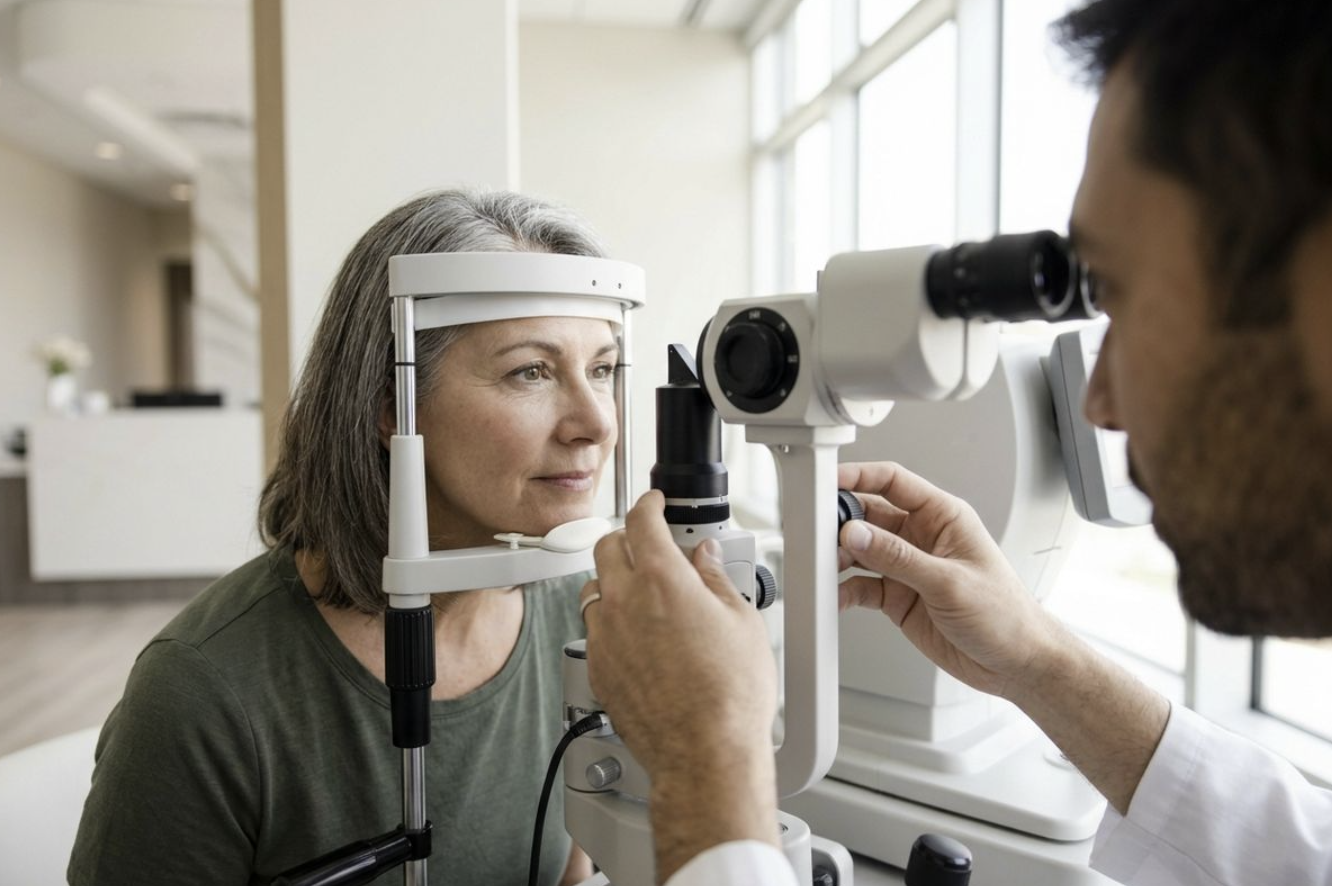
A proper evaluation goes well past reading letters off a chart. Expect your ophthalmologist to look at:
- Corneal thickness and shape, mapped to determine what’s structurally possible
- Eye pressure, which matters for surgical planning and long-term eye health
- Your medical history and current medications, since several drugs affect healing
- Tear film quality and any dry eye symptoms
- Your prescription records from the past 1 to 2 years
Come with questions and ask what the measurements showed. You’ll leave with a clearer picture of your eyes, whichever way the recommendation goes.
Find Out Where Your Eyes Stand
Guessing at your candidacy from a search results page will only get you so far. Book an assessment, get your corneas measured, and find out which procedures are open to you.
Vector Eye Centre brings together ophthalmologists and optometrists who work across laser surgery, ICL, and refractive lens exchange. We can help you get the answers you need so you can see clearly again. Request an appointment and bring your questions along.