

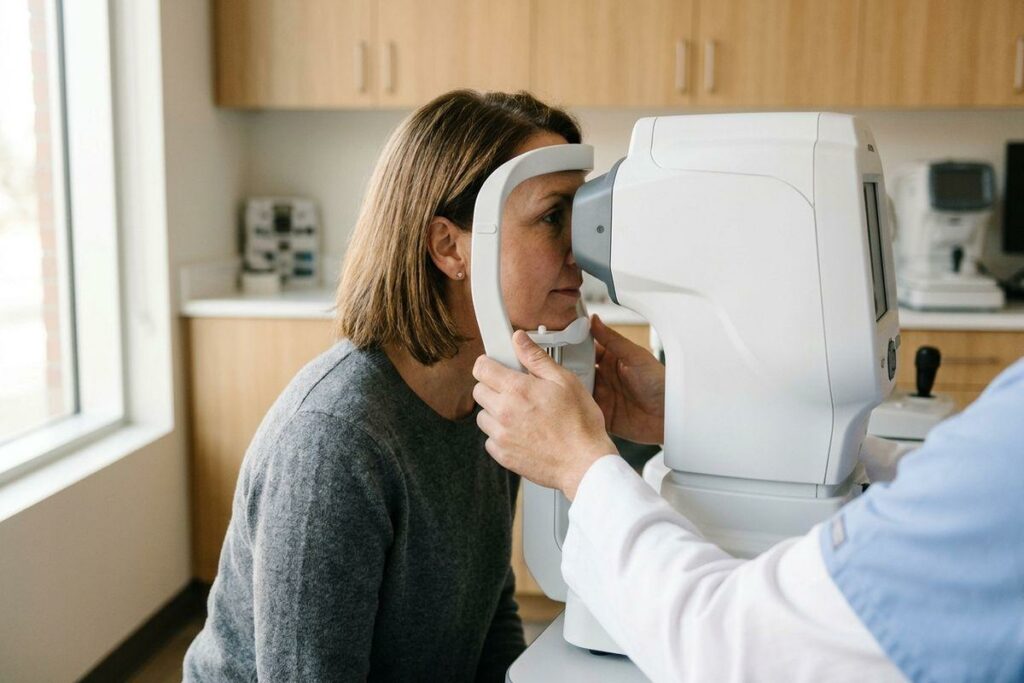
Key Takeaways
- Glaucoma damages the optic nerve and often has no early warning signs.
- Optometrists can detect and diagnose glaucoma using tools like optical coherence tomography (OCT) scans and visual field tests.
- When glaucoma becomes complex or needs surgical care, an ophthalmologist often takes over.
- Regular eye appointments are one of the most reliable ways to detect glaucoma early.
- Vision lost to glaucoma cannot be recovered, so early detection matters.
Glaucoma is a condition that can quietly change your vision before you ever notice something is wrong. It targets the optic nerve, which sends messages about what you see to the brain, often without pain or obvious symptoms in the early stages. By the time many people notice a change, some damage has already occurred.
Optometrists can and routinely do detect and diagnose glaucoma, using modern imaging like optical coherence tomography (OCT) scans and visual field tests. When glaucoma becomes complex, fast-progressing, or requires surgery, your optometrist will refer you to an ophthalmologist, like those at Vector Eye Centre, for specialised care.
An Overview of Glaucoma
Glaucoma can damage the optic nerve, which is the nerve connection between your eye and your brain. What makes it particularly tricky is that it often has no early warning signs. You may feel completely fine while changes are already happening.
Your peripheral (side) vision is typically the first to be damaged. Over time, that loss can narrow into what’s described as tunnel vision. It’s important to note that vision lost to glaucoma cannot be recovered. That’s why early detection matters: Catching it early can help you maintain the vision you still have.
Who Is at Risk and When to Get Checked
Risk Factors Worth Knowing
Certain factors can raise your likelihood of developing glaucoma. Your optometrist or ophthalmologist can help you understand where you stand based on your personal history. The following are common risk factors to be aware of:
- High eye pressure, a family history of glaucoma, or being over the age of 60.
- Past eye injuries, previous eye surgeries, or cardiovascular conditions.
Early Signs to Pay Attention To
Most people with early glaucoma have no symptoms at all, which is why regular eye appointments matter. However, sudden eye pain, redness, blurry vision, halos around lights or nausea can be signs of acute angle-closure glaucoma and require immediate medical attention.
The Tests Used to Detect and Diagnose Glaucoma
Eye Pressure and Optic Nerve Checks
Some of the most common starting points in a glaucoma checkup involve measuring pressure and examining the nerve directly. These tests can give your eye care provider a strong baseline picture. Here is what each one involves:
- Tonometry measures the pressure inside your eye.
- A dilated exam helps your eye doctor to view your optic nerve to assess for signs of damage.
Imaging and Field of Vision Tests
Modern imaging tools give eye care providers a detailed look at what’s happening inside your eye. Combined with vision mapping, they create a fuller picture of your eye health. These 2 tests are commonly used together:
- OCT scans capture detailed images of your retinal layers to spot early changes.
- Visual field tests help to reveal loss in your peripheral (side) vision.
Additional Measurements
Depending on your situation, your provider may take a few more measurements to build a complete assessment. These tests help your provider understand your specific risk level:
- Corneal thickness, measured through pachymetry, may help assess your overall glaucoma risk.
- A gonioscopy exam checks how well your eye’s drainage system is functioning.

What Your Optometrist Can Diagnose and When a Referral Happens
The Optometrist’s Role
Optometrists are well-equipped to detect and diagnose glaucoma during a routine eye appointment. For early-stage cases, they can manage your care directly with prescription eye drops or close monitoring, depending on your situation.
When an Ophthalmologist Steps In
Some cases go beyond what drops and monitoring can address. When that happens, your optometrist can refer you to an ophthalmologist, a medical eye doctor (MD) and surgeon trained to handle more complex situations. A referral typically happens when:
- Glaucoma is atypical, fast-progressing, or not responding well to initial treatment.
- Laser procedures or surgical options become necessary.
What Happens After a Glaucoma Diagnosis
Treatment Options
A glaucoma diagnosis doesn’t mean you’re out of options. Several options can help manage the condition and slow its progression. Your eye care team can recommend a path based on your individual needs and symptoms. This could include eye drops to reduce eye pressure, or laser procedures or surgery when drops alone aren’t enough.
Ongoing Care and Monitoring
Glaucoma is a long-term condition that benefits from consistent attention. Staying on top of your appointments gives your care team the information they need to act quickly if anything changes. If you or a loved one has received a glaucoma diagnosis, it’s important to attend regular appointments to track any shifts in vision or eye pressure.
Schedule Your Next Visit
If you have concerns about glaucoma or want to understand your risk, our team at Vector Eye Centre is here to help. Speak with your optometrist about sending a referral to our office, or learn more about glaucoma on our website.