

Many people dream of seeing the world clearly without reaching for glasses or putting in contact lenses. The freedom to wake up and see clearly, or to enjoy sports and travel without hassle, is a powerful motivator. For years, laser vision correction has helped make this a reality for millions.
If you’re exploring your options, you’ve likely come across different types of procedures. Photorefractive Keratectomy, or PRK, is a type of laser eye surgery that can help reduce your dependence on glasses and contact lenses by reshaping the surface of your cornea. It’s a trusted procedure with a long history of helping people achieve clearer vision.
What Vision Problems Does PRK Correct?
PRK is a type of laser eye surgery that works by changing the shape of your cornea, the clear front part of your eye. This adjustment helps light to focus properly on the back of your eye (the retina), thereby improving your vision.
PRK can help correct refractive errors like:
Who Is a Good Candidate for PRK?
Your eye health, prescription, and lifestyle all play a part in determining if PRK is a suitable option for you. A thorough assessment is the first step to discover if you are a good fit for the procedure.
You Might Be a Good Candidate If You:
- Are over 18 years old
- Have had a stable vision prescription for at least one year
- Have thinner corneas, making you unsuitable for other procedures like LASIK
- Lead an active lifestyle or play contact sports
- Have realistic expectations about your vision results
Factors That Might Make PRK Unsuitable
- An unstable prescription for your glasses or contact lenses
- Certain corneal conditions or advanced glaucoma
- Health conditions that can affect healing
- Are currently pregnant or nursing
The PRK Procedure: A Step-by-Step Look
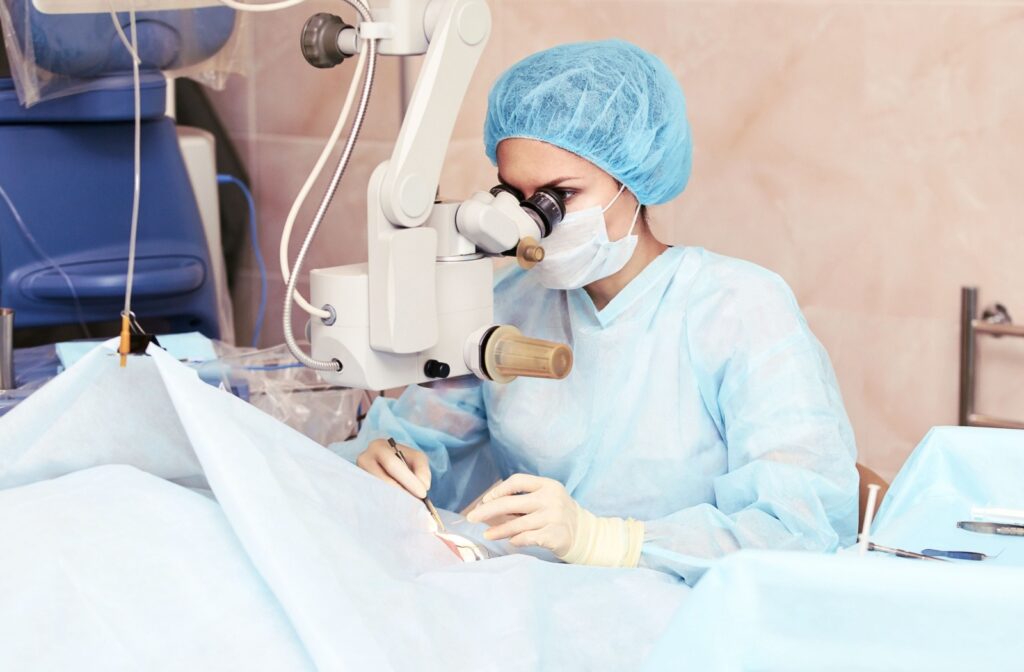
The PRK procedure itself is typically quick and straightforward, often taking about 15 minutes to complete for both eyes. Understanding the process can help you feel more comfortable and prepared. Here is a simple look at what you can expect on the day of your PRK surgery.
Before the Procedure
First, your eyes are completely numbed using special eye drops to ensure you remain comfortable throughout the process. Then, a small device is gently placed to hold your eyelid open. This prevents you from blinking during the procedure.
During the Procedure
The surgeon gently removes the thin, outer layer of the cornea, known as the epithelium. You will then be asked to focus on a target light while a laser reshapes the underlying corneal tissue. This laser is carefully programmed to achieve a precise correction.
After the Procedure
Once the laser portion is done, a soft, clear bandage contact lens is placed on your eye. This acts as a protective shield while the surface layer heals underneath. You will be given medicated eye drops and instructions for at-home care to help with a smooth recovery.
The Pros of PRK Eye Surgery
PRK offers several distinct advantages for people looking for a long-term solution to vision correction. Its unique approach makes it a great choice for many individuals. Here are some of the key benefits.
A High Rate of Success
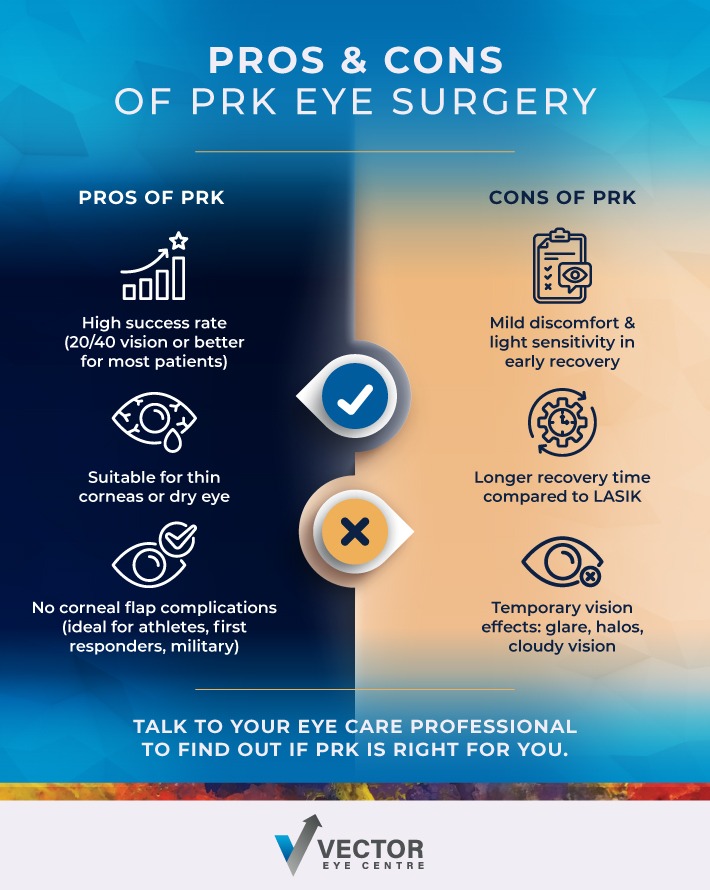
PRK has a strong track record of success. The vast majority of people who have the procedure achieve 20/40 vision or better. This level of vision allows you to perform most daily activities, like driving, without needing corrective lenses.
An Option for More People
PRK can be an alternative for those who may not be candidates for other laser eye surgeries like LASIK. This includes people with thinner corneas or those who manage conditions like dry eye. The procedure avoids the creation of a corneal flap, which can be beneficial for certain eye structures.
No Corneal Flap Complications
Since PRK works on the surface of the cornea, it doesn’t involve creating a hinged flap. This eliminates any risk of flap-related complications, both during and after the procedure. It is a key reason PRK is often recommended for athletes, first responders, and military personnel.
The Cons & Potential Risks of PRK
To make a fully informed decision, it’s also important to understand the recovery process and potential downsides. Being aware of what to expect helps you prepare and sets realistic expectations. Let’s look at the other side of the procedure.
A Longer Recovery Period
The recovery for PRK is generally a bit longer compared to other laser vision correction methods. Your vision may be hazy or blurry for the first few days and can take several weeks to stabilize. This is because the outer layer of your cornea needs time to regenerate naturally.
Initial Discomfort & Sensitivity
It’s common to experience some mild discomfort, a gritty sensation, or sensitivity to light for a few days after the procedure. These feelings are a normal part of the healing process. Your eye care team will provide medicated drops to help manage this and keep you comfortable.
Possible Vision Side Effects
During the healing period, some people may notice temporary side effects as their eyes adjust. These can include:
- Glare or halos around lights, especially at night
- Cloudy or hazy vision
- A feeling of dryness in the eyes
At Vector Eye Centre, we believe that an informed choice is the best choice. Understanding the benefits and considerations of PRK can help you decide if it aligns with your vision goals and lifestyle.
If you have questions about PRK or other forms of eye surgery in Calgary, our team is here to provide clear, easy-to-understand answers. We invite you to contact us to discuss your vision and explore the options available to you.