
You likely know that stress can affect your sleep and mood, but you might wonder about its impact on your eyes. This is a common question, especially when you notice changes in your vision during a stressful time.
While stress can certainly affect your vision, it does not directly cause retinal detachment. This condition happens for specific physical reasons, so understanding the actual risk factors and scheduling regular retinal exams is the best way to protect your sight.
The Causes of Retinal Detachment
A retinal detachment is a physical event. It happens when the retina—a thin layer of tissue at the back of your eye—pulls away from its normal position.
What Leads to a Detached Retina?
A retinal detachment typically happens when a small tear or hole forms in the retina. This allows the fluid in your eye to seep underneath and lift the retina. Factors that can increase this risk include:
- Extreme nearsightedness
- A previous retinal detachment in your other eye
- A family history of retinal detachment
- Previous eye procedures, such as cataract surgery
- A significant eye injury
How Stress Affects Your Eye Health
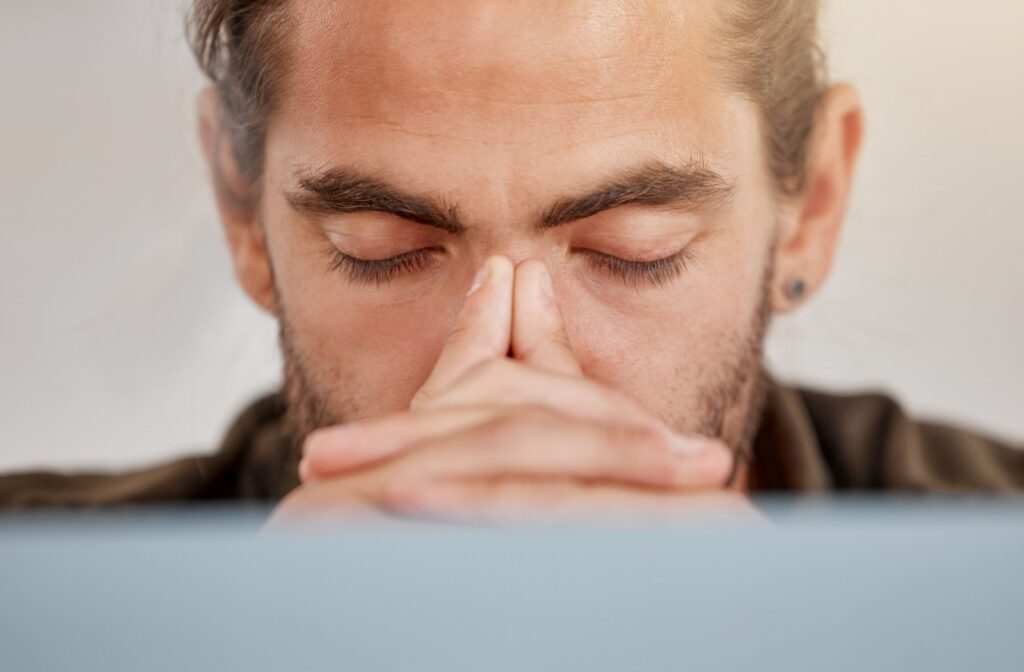
If stress doesn’t cause a detachment, what does it do to your eyes? When you feel stressed, your body releases hormones like adrenaline. This can cause your pupils to dilate and may even create some strain on your eye muscles, leading to temporary vision issues.
Common Signs of Eye Strain
If your eyes feel off during a stressful period, you might notice a few common symptoms. These are usually temporary and fade as you relax. They can include:
- Blurred vision
- Sensitivity to light
- Annoying eye twitches
- Dry eyes or watery eyes
Recognize the Signs of Retinal Detachment
It’s important to know the difference between symptoms of eye strain and the signs of a retinal detachment. A retinal detachment is a serious event that requires immediate medical attention. Unlike stress-related symptoms, these signs are distinct and often appear very suddenly.
Be aware of:
- A sudden burst of new floaters—tiny specks that seem to drift through your field of vision
- Sudden flashes of light in one or both eyes, similar to seeing stars
- A dark shadow or a “curtain” that moves across your peripheral or central vision

Protect Your Vision & Manage Stress
Taking care of your overall wellness is great for your eye health. Simple lifestyle adjustments can help reduce the eye strain that often comes with stress. At the same time, regular eye examinations are key to monitoring the physical health of your retina and the rest of your eye.
Simple Ways to Reduce Eye Strain
To relieve stress, try taking short walks, listening to calming music, or practicing deep breathing exercises. Giving your eyes regular breaks from screens also helps reduce strain.
Consult an Ophthalmologist
At Vector Eye Centre, we believe that informed patients make the best decisions for their health. Our team is here to answer your questions and help you understand the path to clear, comfortable vision. If you have any questions or are interested in determining whether you might be a candidate for a procedure, contact us today.