

You may have heard of both macular degeneration and glaucoma, as they are 2 common eye conditions. It’s easy to get them mixed up since they both can affect vision as we age. But they impact your eyes in very different ways.
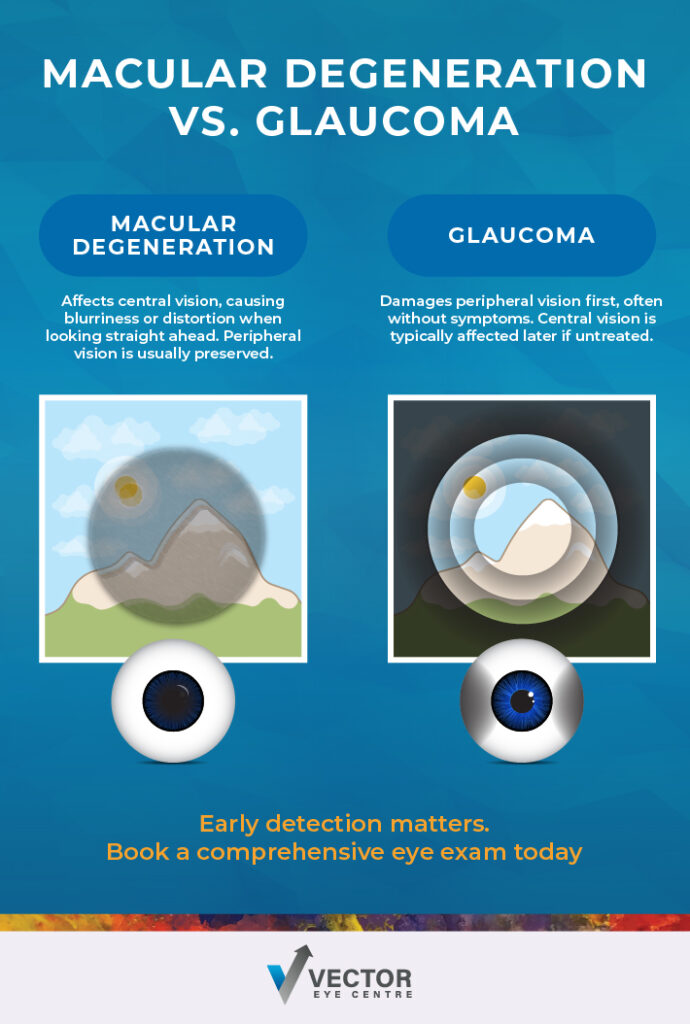
Macular degeneration and glaucoma are not the same; one affects your central vision, and the other affects your peripheral (side) vision.
What Is Macular Degeneration?
Age-related macular degeneration (AMD) affects your central, straight-ahead vision. It happens when the macula—the part of your retina that gives you sharp focus—begins to wear down. This can make it harder to read, drive, or see faces clearly.
You might notice symptoms such as:
- Straight lines appear wavy or crooked
- A blurry or dark spot appears in the middle of your vision
- Colours seem less bright or vivid
This condition comes in 2 forms, with one being much more common than the other.
- Dry macular degeneration involves the gradual thinning of the macula over time.
- Wet macular degeneration is less frequent but involves leaking blood vessels that can cause more rapid changes.
What Is Glaucoma?
Glaucoma is a group of eye diseases that damage your optic nerve, the connection between your eye and your brain. This damage often comes from high pressure inside the eye. Unlike macular degeneration, glaucoma usually impacts your peripheral, or side, vision first.
A Silent Condition
A significant challenge with glaucoma is the lack of early symptoms. Vision loss can occur so gradually that you might not be aware of it, which is why regular glaucoma testing is so important. Often, people don’t notice a change until the condition is more advanced.
Over time, you may experience the following:
- A slow loss of side vision, creating a “tunnel vision” effect
- Bumping into objects on your side more frequently
- A sense of dizziness or imbalance as your field of view narrows
Which Condition Is More Serious?
Both macular degeneration and glaucoma are serious conditions that can lead to vision loss if they aren’t managed. Neither is better or worse; they just present different challenges for your sight. Early detection through regular eye exams is the key to protecting your vision from either one.
Risk Factors and Your Health
You can’t change factors like your age or genetics, but you can focus on healthy habits to support your eyes. Certain lifestyle choices can influence your overall eye health. Your general wellness plays a big role in protecting your vision long-term.
Some daily habits and health issues are known to affect the eyes.
Smoking
- Glaucoma: Smoking can contribute to vascular damage and oxidative stress, which may worsen blood flow to the optic nerve. While it’s not a direct cause of glaucoma, it can increase the risk of glaucoma progression, especially in people already predisposed.
- Macular degeneration (AMD): Toxins from cigarette smoke increase oxidative stress in the retina, accelerating the breakdown of retinal cells and increasing the likelihood of developing late-stage AMD.
Your Diet
- Glaucoma: Nutrients like lutein, zeaxanthin, and vitamins C and E support retinal health and may help protect the optic nerve from oxidative stress.
- Macular degeneration (AMD): A diet rich in leafy greens, colourful fruits, and antioxidant-rich foods is strongly associated with a lower risk of developing AMD.
High Blood Pressure
- Glaucoma: Elevated blood pressure can impact blood flow to the optic nerve. While low blood pressure can also be harmful, uncontrolled hypertension may increase the risk of developing glaucoma or worsen existing optic nerve damage.
- Macular degeneration (AMD): High blood pressure is linked to increased risk of AMD, particularly wet AMD, because it can damage the delicate blood vessels in the retina, accelerating degeneration.
Explore Your Options
If you have concerns about your vision, the first step is always a thorough eye health evaluation. Modern treatments can help manage these conditions, and for other vision problems, you have more options than ever. An exam can give you peace of mind and a clear path forward.
At Vector Eye Centre, we are here to accommodate your needs and answer your questions. We want you to be informed during every step of your treatment process. Contact your eye care provider today to book an appointment and discuss your eye health.