

If you’re tired of reaching for your glasses, you’ve probably thought about vision correction surgery. But what if you also deal with the scratchy, irritating feeling of dry eye? It’s a common concern we hear from people who are ready for a change.
If you have dry eye, laser vision correction is not recommended until the condition has been properly assessed and addressed. A thorough evaluation helps us find the right path forward for your vision and comfort.
The Link Between Dry Eye and Vision Correction
Dry eye is a common condition, and it’s a key factor we consider before any vision procedure. Laser vision correction can worsen dry eye symptoms, especially if the eye surface is already irritated or unstable before surgery.
For this reason, dry eye should be treated before moving forward with laser vision correction. Our goal is to make sure your eyes are in the best possible shape.
How We Determine If Your Eyes Are Ready for Surgery
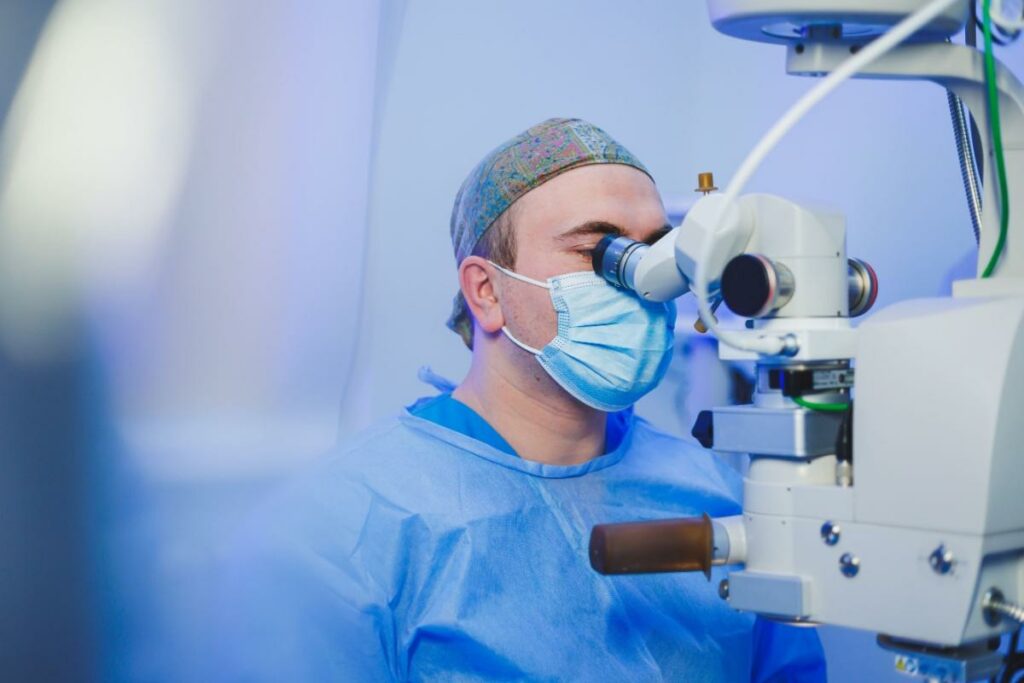
Before any procedure, a thorough eye health assessment is the first step. For anyone with symptoms of dry eye, we use modern diagnostic technologies to closely examine your tear production and the surface of your eyes. This helps us confirm whether your dry eye needs to be treated first and which vision correction options may be safest for you.
Your Pre-Surgery Consultation
During your consultation, we’ll discuss your vision goals and overall eye health. This is your time to ask questions and share any concerns you might have. We listen carefully to understand your unique needs.
A Close Look at Your Tear Film
We take a detailed look at your tear film, the thin layer of moisture that protects your eyes. By assessing its quality and stability, we can understand the specific cause of your dry eye. This information helps us create an effective management plan before discussing next steps for surgery.
Check the Health of Your Eye’s Surface
A healthy eye surface is important for clear vision and a smooth recovery. We carefully examine the front of your eye for any signs of dryness or inflammation. This allows us to prepare your eyes properly before determining whether laser vision correction is appropriate.
Eye Surgery Options If You Have Dry Eye
Not all vision correction surgeries are the same. If your eyes are prone to dryness, laser vision correction may not be the best first option until your dry eye has been managed. Other procedures may also be worth discussing depending on your eye health, prescription, and long-term vision goals.
Photorefractive Keratectomy (PRK)
PRK (photorefractive keratectomy) is a type of laser vision correction, so dry eye should still be addressed before this procedure is considered. PRK reshapes the cornea’s surface without creating a flap. While it may be discussed for some patients, your candidacy depends on the health and stability of your tear film and eye surface.
Implantable Collamer Lens (ICL)
ICL may be an option for some patients who are concerned about dry eye because it does not reshape the cornea the way laser vision correction does. Instead, a biocompatible lens is placed inside the eye to help correct vision. Because the corneal surface is not altered in the same way, ICL may carry less risk of post-operative dryness compared to laser vision correction.
Refractive Lens Exchange (RLE)
Refractive lens exchange can be another excellent option, especially if you are over 45. This procedure works like modern cataract surgery by replacing your eye’s natural lens with a custom lens. As the eye surface remains untouched, this helps avoid worsening dry eye symptoms. It can correct nearsightedness, farsightedness, astigmatism, and the need for reading glasses in a single procedure.
Find the Right Procedure for You
Your eyes are unique, and your treatment should be too. After a comprehensive assessment, we can recommend a procedure for your specific situation. If dry eye is present, the first step is addressing it properly before moving forward with laser vision correction or exploring alternatives like ICL or RLE.
Manage Dry Eye Before and After Your Procedure
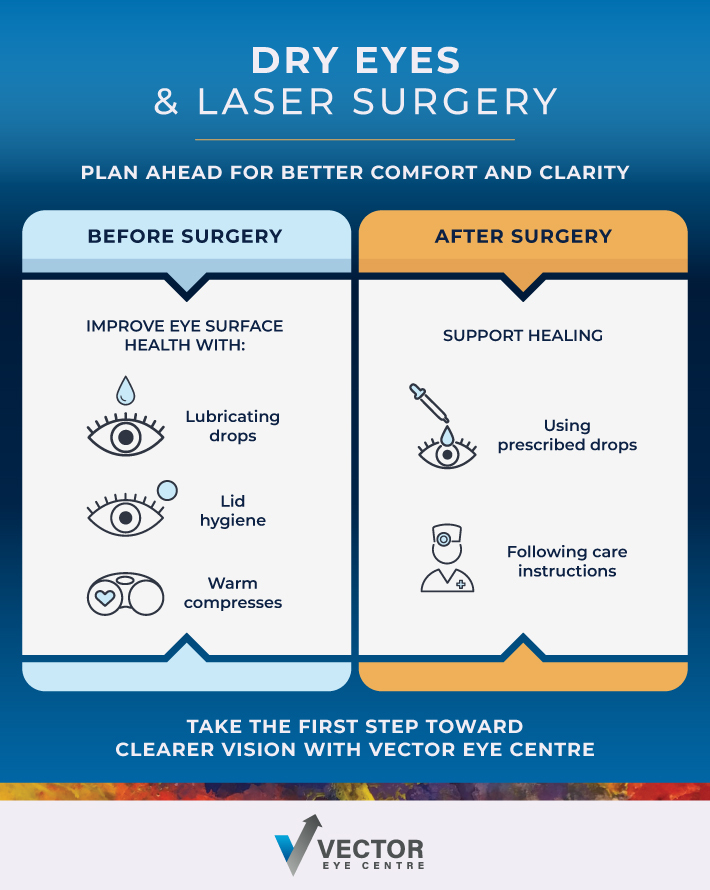
Getting your eyes ready for surgery and caring for them afterward is part of the process. A solid plan can help you feel comfortable and achieve clear vision. We’ll guide you through every step.
Treatments to Prepare Your Eyes
We offer several personalized treatment options for dry eye that can improve your eye’s surface health before a procedure. These might include:
- Preservative-free lubricating drops
- Special eyelid hygiene routines
- Warm compresses to improve oil gland function
- In-office applied thermal lid treatments
Tips for Post-Surgery Care
After your surgery, we’ll give you a clear plan to follow. This often includes using specific eye drops for a period to help with healing and comfort. Following these instructions carefully helps support a smooth recovery.
When to Wait on Eye Surgery
Our priority is your safety and a successful outcome. There are a few situations where we might recommend waiting or exploring other options instead of surgery. We always put your long-term eye health first.
Severe or Unmanaged Dry Eye
If your dry eye is severe, we’ll focus on treating the underlying cause first. Often, this is related to issues with the eyelid’s oil glands, a condition known as meibomian gland dysfunction. Getting symptoms under control can create a healthier foundation for a surgical procedure. A stable and comfortable eye surface is especially important before laser vision correction is considered.
Certain Health and Eye Conditions
Your overall health plays a role in your suitability for eye surgery. We’ll review your medical history to make sure there are no underlying conditions that could affect your outcome. Open communication helps us make the best recommendation for you.
An Unstable Vision Prescription
For a lasting result, your glasses or contact lens prescription should be stable. If your vision is still changing, it’s usually best to wait.
Clear Vision Starts with a Conversation
The journey to better vision starts with a conversation. A detailed consultation allows us to assess your eye health, including any dry eye symptoms, and discuss your options for vision correction. If dry eye is present, we’ll focus on addressing it first and then help determine whether laser vision correction, ICL, RLE, or another option is the best fit. Our team at Vector Eye Centre is here to create a personalized plan just for you. Book your consultation today.