

You’ve likely heard about the freedom that comes with refractive lens exchange (RLE), but it’s smart to look at the whole picture. A clear understanding of the potential downsides helps you make a confident, informed decision about your vision correction options. Let’s walk through what you should consider before moving forward with a procedure.
Like any medical procedure, lens replacement surgery has potential disadvantages, but most are temporary side effects that are part of the normal healing process. Knowing these possibilities in advance helps you prepare for a smooth recovery and set realistic expectations for your final results.
Common Side Effects After The Procedure
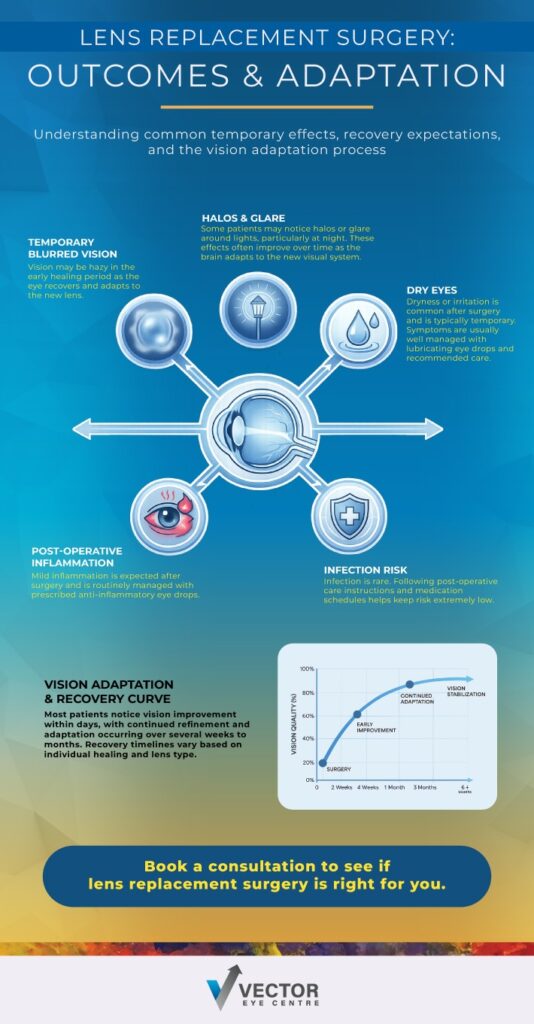
Side effects are usually temporary and a normal part of your body’s healing response. Your eyes are adjusting to a significant and positive change. It’s common to experience a few minor issues during recovery.
Blurry Vision & Light Sensitivity
It’s normal for your vision to appear slightly blurry or hazy for a few days after your procedure. You might also find that bright lights feel more intense than you’re used to; it typically improves quickly as your eyes heal.
A Scratchy or Dry Eye Sensation
You may feel as if there is something in your eye, a sensation often associated with temporary dryness. Dryness is a common part of healing, especially in a drier climate like Calgary, and can often be managed with personalized dry eye treatments and lubricating drops. If you have existing dry eye concerns, we will offer solutions to help before and after your procedure.
Glare & Halos at Night
You may notice halos or starbursts around headlights and streetlights, especially when driving at night. This is most commonly related to the intraocular lens (IOL) selected prior to, and placed in your eye during, the surgery. For most people, this effect becomes much less noticeable over a few weeks or months as the brain adapts to the new, clearer vision.
Potential Risks & Complications
Lens replacement is generally considered a safe procedure with a high success rate. However, like any surgery, it has some potential risks. These events are uncommon but important for you to be aware of.
- Inflammation & swelling: Some swelling inside the eye is normal as your eye heals, and responds well to medicated eye drops prescribed for your recovery.
- Infection: The risk of infection is typically very low (less than 1/1000) because the procedure is performed in a sterile environment; however, antibiotic drops are utilized after the surgery for 1 week or longer to help protect your eyes.
- Posterior capsule opacification (PCO): Months or years later, the thin membrane behind your new lens can become cloudy. People sometimes call this a “secondary cataract,” and it is corrected with a simple, quick, and painless YAG laser treatment in the clinic.
Your Vision After Eye Surgery in Calgary
The goal of the procedure is to improve your vision, but the final result may require an adjustment period. What you experience after your eye surgery depends on your unique eyes and the type of intraocular lens you choose.
The Potential Need for Glasses
Even with today’s innovative lenses, some people still need glasses for specific activities, such as reading fine print or prolonged reading. This is often related to presbyopia, an age-related condition that affects near vision. Your new vision can be great for most things—but perhaps not for everything.
An Adjustment Period for Your Brain
Your brain must adapt to processing the new, clear images it receives through your new lens. You might notice that colours seem much brighter and more vibrant. The adjustment period is a normal and exciting part of the journey.
Considerations Before You Choose Lens Surgery
The decision to have lens replacement surgery is a personal one. It’s not always about urgency, but about finding the right time and solution for your lifestyle. Above all, at Vector Eye Centre, we want to ensure the RLE procedure is a safe option for you.
Your Personal Vision Goals
The right choice for you depends on what you want to achieve. Are you hoping to reduce your dependence on reading glasses, distance glasses, or both? We can discuss your goals to find a lens option that fits your life. Please also watch our videos on our website for more information.
Your Overall Eye Health
Your eye doctor will perform a comprehensive exam to assess your overall eye health. Certain pre-existing conditions can influence the surgical plan or the type of lens that is right for you. A thorough evaluation helps set you up for a great outcome.
What Are The Alternatives To Lens Replacement?
Lens replacement is an effective way to restore clear vision, but it’s not the only path. You have other options available if you decide that now isn’t the right time for surgery.
Stay with Glasses or Contact Lenses
Continuing to use glasses or contact lenses is a valid choice. If your current prescription works for you and you don’t mind wearing them, you can simply update them as your vision changes. This option gives you time to consider future surgery.
Explore Other Refractive Procedures
Depending on your age and prescription, you might be a candidate for another type of vision correction procedure. Options such as laser eye surgery and ICL surgery can address nearsightedness, farsightedness, and astigmatism. We can explore all possibilities with you.
How Vector Eye Centre Can Help
At Vector Eye Centre, we provide clear, honest information so you can make a choice that feels right for you. We believe in taking the time to answer your questions and involving you in your care plan at every step. Contact our team to schedule a consultation and learn more about your vision correction options.